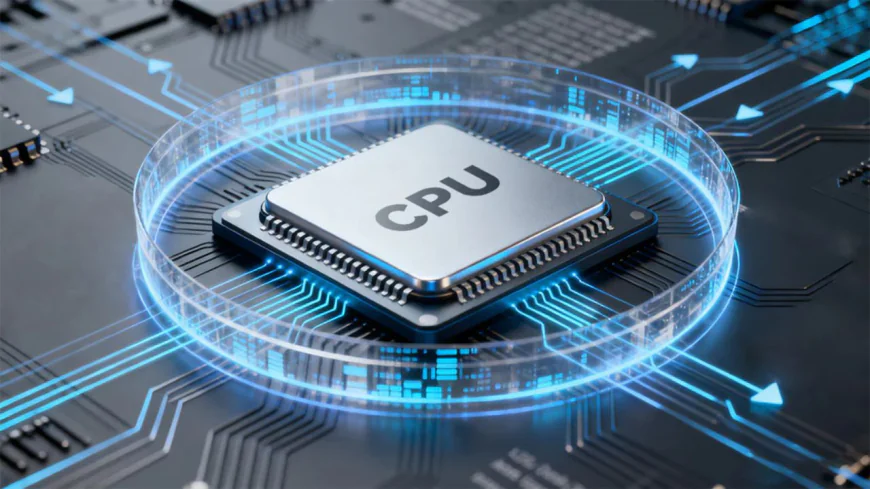

What Is a CPU Cache? Understanding Its Role in Computer Performance

What Is a CPU Cache? Learn what CPU cache is, how it works, the different cache levels, and why it plays a critical role in improving computer speed and overall system performance.

What Is a CPU Cache? Understanding Its Role in Computer Performance

What Is a CPU Cache? CPU cache is a small, ultra-fast memory built directly into or very close to a computer's processor. Its primary purpose is to store frequently used data and instructions so the CPU can access them much faster than retrieving information from the system's main memory (RAM).

Modern computers rely heavily on CPU cache to improve performance, reduce delays, and help processors complete tasks more efficiently.

What Is a CPU Cache and Why Is It Important?

A CPU cache acts as a high-speed storage area between the processor and RAM. Since the CPU operates much faster than standard memory, constantly waiting for data from RAM would slow down performance.

To solve this problem, the processor stores commonly accessed information in the cache. When the CPU needs that data again, it can retrieve it almost instantly.

This significantly reduces processing time and helps applications run more smoothly.

How Does CPU Cache Work?

Whenever a program runs, the processor continuously requests data and instructions. Instead of accessing RAM every time, the CPU first checks whether the required information is already stored in the cache.

Cache Hit

A cache hit occurs when the requested data is found in the cache. The processor can access it immediately, resulting in faster performance.

Cache Miss

A cache miss occurs when the data is not available in the cache. The processor must then retrieve it from RAM, which takes longer.

Modern processors are designed to maximize cache hits and minimize cache misses.

Types of CPU Cache

Most modern CPUs use multiple cache levels.

L1 Cache

L1 cache is the smallest and fastest cache level. It is built directly into each processor core and provides extremely quick access to frequently used data.

L2 Cache

L2 cache is larger than L1 cache but slightly slower. It serves as a secondary storage area for information that may not fit inside L1 cache.

L3 Cache

L3 cache is typically shared among multiple processor cores. It offers a larger storage capacity and helps improve communication between cores while reducing access to RAM.

Some advanced processors may also include additional cache levels.

Benefits of CPU Cache

Faster Processing Speed

By storing frequently used data close to the processor, CPU cache significantly reduces waiting times.

Improved Multitasking

Applications can access information more quickly, allowing smoother multitasking and better responsiveness.

Better Gaming Performance

Many modern games benefit from larger CPU caches because they frequently access similar data during gameplay.

Increased System Efficiency

A well-designed cache system helps reduce memory bottlenecks and improves overall computer efficiency.

CPU Cache vs RAM

Although both cache and RAM store data temporarily, they serve different purposes.

CPU cache is much faster but has a much smaller capacity. RAM is larger but slower. The cache acts as a bridge between the processor and RAM, ensuring frequently used data remains readily available.

This combination allows computers to balance speed and storage capacity effectively.

Does More CPU Cache Mean Better Performance?

In many cases, a larger cache can improve performance, especially for gaming, content creation, and data-intensive applications.

However, cache size is only one factor. Processor architecture, clock speed, core count, and software optimization also play important roles in determining overall performance.

A CPU with a larger cache is not automatically faster than every processor with a smaller cache.

Where Is CPU Cache Used?

CPU cache is essential in virtually all computing devices, including:

  • Desktop computers
  • Laptops
  • Smartphones
  • Servers
  • Gaming consoles
  • Embedded systems

Without cache memory, modern processors would spend much more time waiting for data, resulting in significantly slower performance.

What Is a CPU Cache?

What Is a CPU Cache? It is a high-speed memory component that stores frequently accessed data and instructions close to the processor. By reducing the need to retrieve information from slower system memory, CPU cache helps computers run faster, improves responsiveness, and enhances overall performance. Whether you are gaming, browsing the web, editing videos, or running business applications, CPU cache plays a crucial role in delivering a smooth computing experience.